4025 52/70 Bearing
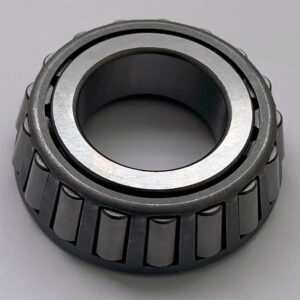
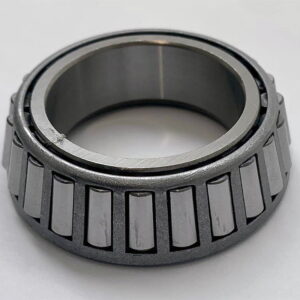
Welcome to the central hub for all trailer axle bearing solutions at Canadian Axle Inc. You are viewing one of the most critical, and most frequently serviced, components of any trailer system. The bearings listed here are not just generic parts; they are high-quality, OEM-specified kits designed to perfectly match our Flexiride® rubber torsion axles and other compatible systems, ensuring the safety, reliability, and longevity of your trailer.
While the Flexiride® axle body is a maintenance-free marvel, the bearings are the hard-working wear-and-tear components that carry your entire load. They are the essential link between your stationary axle and your spinning wheel.
Whether you are a repair shop stocking up, a fleet manager performing preventative maintenance, or a trailer owner needing a replacement, you will find the correct, durable, and reliable bearing kits right here.
The Critical Role of Your Trailer Bearings
It is easy to overlook something as small as a bearing, but its role is monumental. A set of bearings is responsible for bearing the entire gross weight of your trailer and its cargo. A 7,00S0 lb equipment hauler is, quite literally, riding on a few square inches of hardened steel.
The primary job of a bearing is to allow the wheel and hub assembly to rotate with minimal friction. They do this by replacing sliding friction with the rolling friction of precision-engineered rollers.
Load, Heat, and Friction: As the wheel spins, the bearings are in a constant battle against friction and heat. The grease packed inside them is the only thing providing lubrication and heat dissipation. If this lubrication fails, or if the bearing is compromised by an external element, the entire system will rapidly destroy itself. This is why bearing quality, and correct maintenance, is not just a performance issue—it's a critical safety imperative.
The Anatomy of a Bearing Kit
When you purchase a replacement bearing kit from Canadian Axle, you are receiving a complete, matched-set solution. We strongly advise against replacing just one part of a bearing assembly. They are designed to wear together and should always be replaced as a full set.
A typical bearing kit you'll find here includes:
- Inner Bearing (Rear Bearing): This is the larger of the two bearings. It sits closest to the trailer frame and bears the majority of the vertical load.
- Outer Bearing (Front Bearing): This is the smaller bearing, located on the outside of the hub, just behind the spindle nut and dust cap.
- Races (or "Cups"): These are the hardened steel rings that are pressed into the trailer's hub. The bearings themselves do not roll against the hub; they roll inside these precision-matched races. It is essential to replace the races every time you replace the bearings. Using new bearings on an old, worn race is a primary cause of premature failure.
- Grease Seal (Inner Seal): This is arguably the most important part of the kit. This circular seal is pressed into the back of the hub. It has two jobs: keep the high-temperature grease in and, more importantly, keep the "bearing killers" out. Water, road salt, grime, and dust are the #1 enemies of your bearings. A high-quality, dual-lip seal is your first and best line of defense.
- Dust Cap (or Bearing Cap): This is the final line of defense, a metal cap tapped into the end of the hub to protect the outer bearing and the spindle nut from the elements.
Recognizing the Signs of Bearing Failure
A bearing rarely fails instantly and without warning. It sends signals. Knowing what to look, listen, and feel for can be the difference between a simple, 1-hour repair and a catastrophic failure on the side of the highway.
- The "Sound" Check: The most common sign is noise. Worn or "pitted" bearings will create a whining, grinding, or rumbling sound that changes with your speed. If you hear this, your bearings are already in a state of failure.
- The "Heat" Check: After a drive, cautiously place your hand on the hub. It's normal for a hub to be warm to the touch (around 50-75°C). However, if a hub is too hot to keep your hand on, it is a sign of extreme friction and a severe lack of lubrication. The bearing is running "dry" and failure is imminent.
- The "Wobble" Check: Safely jack up the trailer wheel. Grab the tire at the 12 o'clock and 6 o'clock positions. Try to "rock" the wheel. If you feel any "play," "clunking," or "wobble," your bearings are worn out and are no longer holding the hub securely to the spindle.
- The "Visual" Check: Look at the inside edge of your wheel. Do you see streaks of grease? This is a sign of a failed grease seal. If grease is getting out, you must assume water and dirt are getting in. This bearing must be serviced immediately.
Selecting Your Replacement Bearing Kit
The products below are categorized by their axle capacity. This is the simplest way to identify your replacement part.
- 3500 Bearing Kits: These are the standard for our 3500 lb. capacity axles. You will find these on the vast majority of medium-duty trailers, including single-axle utility trailers, landscaping trailers, small boat trailers, and many pop-up campers.
- 52/70 Bearing Kits: This is our heavy-duty solution, designed for both 5200 lb. and 7000 lb. capacity axles. These are found on tandem-axle trailers, equipment haulers, car haulers, gooseneck trailers, and other industrial or heavy-use applications.
What if I'm not sure which kit I need?
Do not guess. Using the wrong bearing will, at best, not fit. At worst, it will fit poorly and fail, damaging your spindle and hub in the process.
- Check Your Axle: Look for a capacity tag on the axle tube itself.
- Check Your Old Bearings: When you remove the old bearing, the part number is almost always stamped directly onto the metal.
- When in Doubt, Contact Us: Our expert team is here to help. You can provide us with the part numbers from your old bearings or the serial number from your axle, and we will ensure you get the exact, correct kit for your trailer.
Your trailer is only as reliable as its smallest components. By choosing our high-quality, OEM-specified replacement bearing kits, you are ensuring thousands of miles of safe, smooth, and trouble-free towing.